
With the attrition rate continuing well above 20 per cent, one of the highest in the segment, Infosys is on a drive to reimagine the way it engages with employees starting from the time of recruitment itself. The company is using digital technologies in order to simplify recruitment, provide faster career track to employees, and incentivise people with top skills. The company is looking at doubling the number of recruits from tier-I engineering colleges such as IITs and NITs to enrich its talent base. These candidates who are offered twice the salary as compared to regular campus recruits, join as 'power programmers', a term that has been internally coined by the company to recognise the top coders.
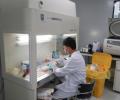
Concerned about the rise of antibiotic resistance and the time it takes for drugs developed abroad to reach Indians, the government is considering holding its own clinical trials. Clinical trials for new drugs have so far primarily been conducted only by private Indian or foreign drug firms. But given the stringent nature of India's regulatory environment for clinical trials, several pharmaceutical companies have moved their trials out of India. As a result, only 1.2 per cent of global clinical trials take place in India.
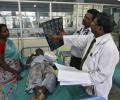
According to a senior government official, the plan is to do "collective bargaining" for certain medical devices and implants by assuring a bulk requirement to the manufacturers. "The requirement for these devices runs into millions. We assure them that the requirement is going to be in bulk. In return, they should offer us better rates," he said.

The government said that "in exercise of extraordinary powers in public interest, conferred by paragraph 19 of the DPCO, 2013", the ceiling prices of 21 key formulations had been increased. These formulations include common medicines like BCG vaccines, penicillin, malaria and leprosy medicines (Dapsone), life-saving drugs like Furosemide (used to treat fluid build-up due to heart failure, liver scarring, or kidney disease), vitamin C, some common antibiotics, and anti-allergy medicines.

The hotels in the pipeline will include a range of Marriott brand portfolios such as JW Marriott, Tribute Portfolio and Sheraton.

Titan is investing heavily on research and development, which will do things beyond a smart watch can do today such as switching off lights, locking, and unlocking doors and making payments. Titan is also working closely with start-ups, too, to develop such futuristic features.

The company will now focus on specialty products in Japan; it is open to inorganic opportunities, especially in India.

Revenue from convenience fees has grown at a compound annual rate of 85 per cent for multiplex chain operator Inox Leisure and 58 per cent for PVR.

The intention of the government is to cap prices of drugs that are essential and which the public widely uses.

The drug that it would supply is called Olanzapine, used to treat schizophrenia and bipolar disorder.

GSK is continuing with investigations into the potential source of the NDMA, which is a known environmental contaminant and found in water and foods, including meats, dairy products, and vegetables.

Riding on this change in aspirations, V-Mart a value retail chain is growing close to 22 per cent year-on-year, and is aggressively looking to expand its footprint, with 60 new stores this year.

The slowdown had been brewing since 2016 but was intensified further by several disruptions in the past two years including demonetisation.

Maharashtra govt, California-based Zipline to launch the automated delivery service funded by Serum Institute.

What worked for Airtel was that its data traffic growth was 13 per cent sequentially and its average data usage was even higher than Jio's at 11.9 gigabyte per month per user.

Used smartphones are gaining popularity in the hinterland, the main market for JioPhone. Share of JioPhone in the feature phone market had shrunk from 47% in Q2 of 2018 to 28% a year after.

As on July 31, the valuation of his shareholding in the company stood at Rs 9,830 crore.

According to telcos and analysts, this is due to SIM consolidation happening after the minimum recharge plans were implemented by incumbents.

The growth in imports was led by product categories such as diagnostic items, ultra-sonogram machines, MRI and ECG apparatus, syringes with needles, suture needles, digital thermometers, malaria diagnostic kits, and hearing aids.

Bharti Airtel called the prices exorbitant while Vodafone Idea wants the auctions take place in 2020. The auctions need to happen when the infrastructure is ready for the roll out, be it in terms of fiberisation levels, or optimisation of equipment and software etc. Spending a hefty amount on a technology (airwaves) that at present offers limited returns is not going to be a priority for the incumbent telcos.
 © 2025 Rediff.com - Investor Information - Advertise with us - Disclaimer - Privacy Policy - Sitemap - Feedback - About us - Terms of use - Grievances